What sealcoating does for your pavement
Sealcoating applies a protective layer over existing asphalt, shielding the binder from the elements that break it down fastest in New Mexico: intense UV radiation, monsoon rain, and the oil and fuel drips that soften the surface over time. Think of it as sunscreen for your pavement.
A properly applied sealcoat fills minor surface voids, slows oxidation, and restores the rich black appearance that makes a property look well maintained. It does not fix structural problems, but it significantly slows the aging process on pavement that is still in reasonable shape.
Benefits in the New Mexico climate
The desert sun is relentless. Asphalt binder oxidizes faster at elevation and under constant UV exposure, turning gray and brittle within a few years if left unprotected. Sealcoating blocks UV penetration and keeps the binder flexible longer.
When monsoon season hits, water finds every hairline crack. A fresh sealcoat creates a water-resistant barrier that prevents moisture from reaching the base layers where the real damage starts. Combined with crack filling before the seal is applied, you get a surface that handles seasonal downpours without accelerated deterioration.
- UV protection that slows oxidation and keeps asphalt flexible
- Water resistance to guard against monsoon moisture infiltration
- Restored dark appearance that improves curb appeal instantly
- Resistance to oil, gasoline, and chemical spills that soften raw asphalt
- Extended pavement life at a fraction of the cost of resurfacing
When to sealcoat
New asphalt should cure for at least six months before its first sealcoat. After that, most driveways and parking lots in the Albuquerque area benefit from reapplication every two to three years, depending on traffic volume and sun exposure.
Timing matters. We schedule sealcoating when air and surface temperatures are above 50 degrees and no rain is forecast for 24 hours. In New Mexico, late spring through early fall gives us the widest window, but we watch the forecast carefully during monsoon season to avoid washouts on fresh material.

Our sealcoating process
We start by cleaning the surface thoroughly, removing dirt, debris, and vegetation from cracks. Any oil stains get treated with a primer so the sealcoat bonds properly. Cracks wider than a quarter inch are filled with hot rubberized crack sealant before the coating goes on.
The sealcoat is applied in two coats with proper dry time between passes. We use commercial-grade coal-tar or asphalt-emulsion sealers depending on the application, and we apply them with squeegee, brush, or spray equipment matched to the surface size and texture. Edges, curb lines, and utility covers are masked and handled with care.
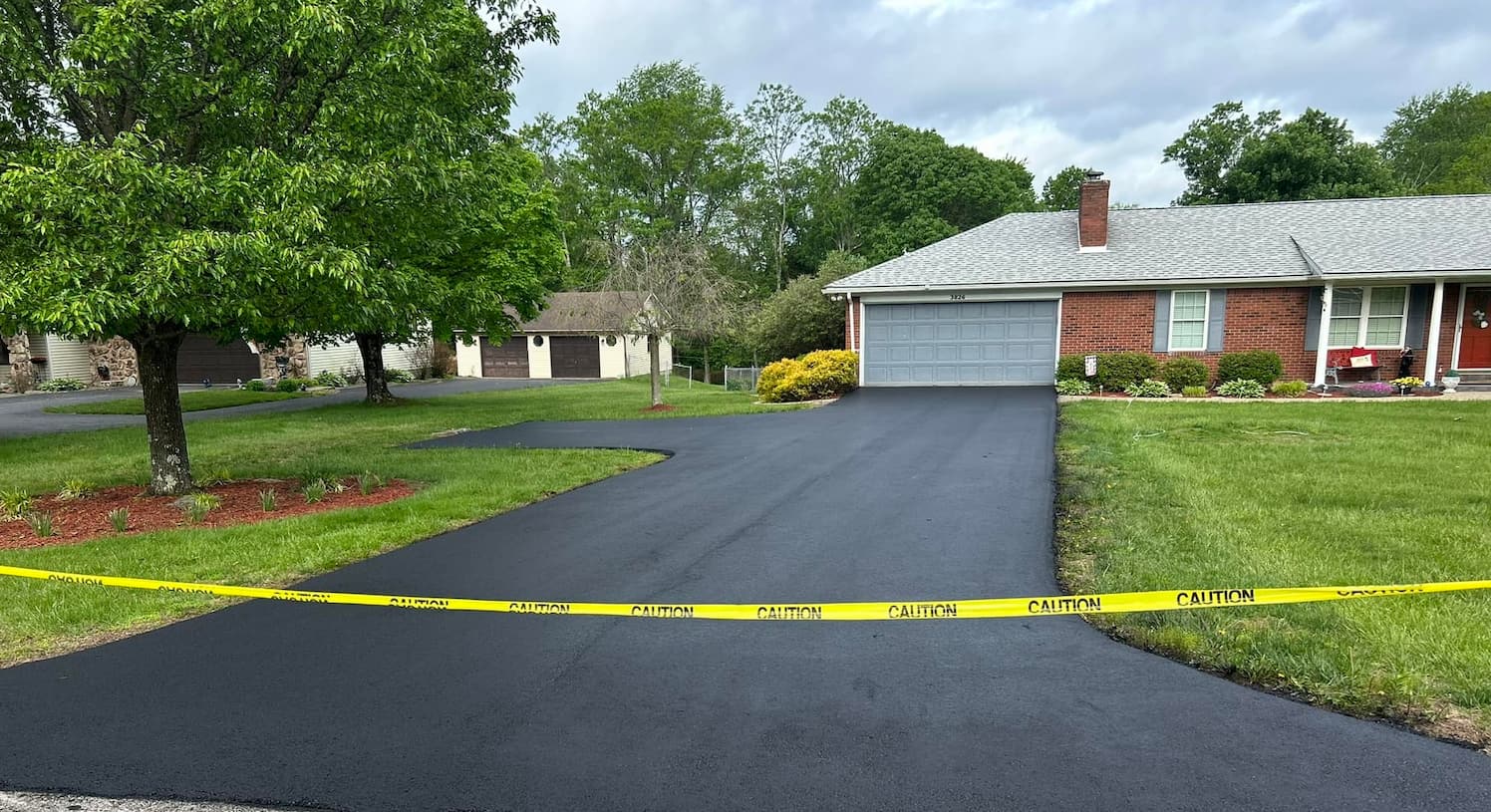
After application, we set up barricades and signage so foot and vehicle traffic stay off the surface until it is fully cured, typically 24 to 48 hours depending on temperature and humidity.